How To Keep A Luxury Cocktail Hour Refined, Social, And Perfectly Timed
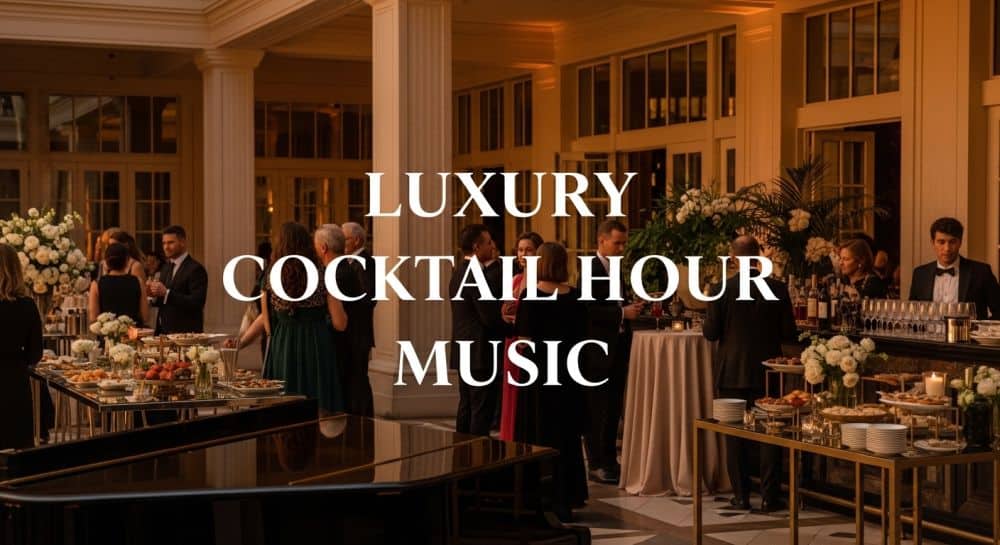
A luxury wedding cocktail hour is not just drinks and small plates between the ceremony and reception. It is the first moment your guests experience as a group, the first time the energy of your wedding day shifts from observation to participation. At venues like Park Chateau in East Brunswick, Shadowbrook at Shrewsbury, or a Manhattan rooftop with skyline views, the music during this window controls something most couples never think about: where people stand, how loud they talk, and whether they drift toward the bar, the food stations, or each other.
After performing at hundreds of upscale weddings across New Jersey, New York City, and Philadelphia, I have learned that the difference between a good cocktail hour and a great one comes down to three variables: song pacing, volume control, and guest flow. These are not details you leave to chance. They require a strategy, and that strategy starts well before the first guest picks up a drink.
This guide covers the tactical side of cocktail hour music at high-end venues. If you are looking for general advice on choosing a cocktail hour music selection, I have a separate post for that. This one assumes you already know live piano matters. Now, here is exactly how to execute it at the luxury level.
- Volume should sit between 60 and 68 dB during an upscale cocktail hour, just below normal conversation level, so guests can talk without raising their voices.
- Song pacing follows a three-phase energy arc: warm and mid-tempo for the first 20 minutes, slightly brighter through the middle, and a deliberate wind-down in the final 10 minutes before the reception entrance.
- Piano placement directly affects guest flow. Positioning the instrument near the center of the room draws traffic inward, while corner placement pushes guests toward the bar and food stations.
- Vendor coordination with your planner, catering captain, and photographer during cocktail hour prevents timing collisions that disrupt the guest experience.
- Multi-zone cocktail hours at large estates or indoor-outdoor venues need a sound strategy for each space, not just the room with the piano.
- The cocktail-to-reception transition is one of the most overlooked music cues of the entire wedding day, and getting it right keeps the energy arc intact.
The Energy Arc: How to Pace 60 to 90 Minutes of Cocktail Hour Music
Every luxury wedding cocktail hour follows an energy arc, whether the couple plans for it or not. The question is whether that arc works in their favor or happens by accident. At a high-end venue in Bergen County or a waterfront estate on the Jersey Shore, the stakes are too high for random song selection.
Here is the three-phase pacing framework I use at nearly every upscale event.
Why the Arc Matters More at Luxury Venues
At a 200-guest celebration in a grand ballroom like Crystal Plaza or The Rockleigh, the cocktail hour often runs 75 to 90 minutes. That is a long time to hold energy with a flat playlist. Without a deliberate musical progression, guest energy peaks too early, drops in the middle, and never recovers before the reception doors open.
The three-phase arc prevents that. It gives each segment of the cocktail hour its own purpose and keeps the evening’s momentum building in the right direction.
At an upscale wedding, the cocktail hour is not background noise. It is the opening act. If you pace it correctly, your guests walk into the reception already feeling the energy of the night. If you pace it poorly, the DJ or bandleader spends the first 20 minutes of the reception trying to restart a cold room.
— Arnie Abrams, PianistAdjusting the Arc for Shorter or Longer Cocktail Hours
Not every wedding cocktail hour runs the same length. Here is how I adjust the timing:
45 to 60 Min
- Compress Phase 1 to 10 minutes
- Phase 2 covers the bulk (30 to 40 min)
- Phase 3 wind-down: 5 to 8 minutes
- Tighter tempo range (90 to 110 BPM)
75 to 90 Min
- Phase 1 expands to full 20 minutes
- Phase 2 can include genre shifts
- Phase 3 wind-down: 10 to 15 minutes
- Wider tempo range (80 to 120 BPM)
90+ Min
- Add a 10-min quiet interlude at midpoint
- Two mini-arcs instead of one long arc
- Consider a brief set break at 60 min
- Coordinate with catering for food timing
Volume Control Strategy by Venue Type
Volume is the most overlooked variable in wedding music planning. Most couples think about what songs to play but never discuss how loud they should be played. At a luxury venue, this is a critical detail. Too loud and guests shout over each other. Too soft and the music disappears into the room noise, leaving pockets of silence that feel awkward.
The target range for an upscale cocktail hour is 60 to 68 dB. For context, normal conversation happens at about 60 to 65 dB. You want the piano sitting just at or slightly below that threshold, so music is present without forcing anyone to raise their voice.
How Room Acoustics Change the Equation
Every venue has its own acoustic personality. A ballroom with 30-foot ceilings and marble floors, like The Venetian in Garfield, will produce echo and reverberation that makes a piano sound louder than its actual output. A tented estate on the Philadelphia Main Line absorbs sound through fabric walls, meaning the same volume setting will sound noticeably quieter.
Here is how I approach volume control at different venue types:
| Venue Type | Acoustic Challenge | Target dB Range | Approach |
|---|---|---|---|
| Grand Ballroom | Hard floors, high ceilings create echo | 58 to 63 dB | Play softer than instinct suggests. Reflections add 3 to 5 dB naturally. |
| Tented Estate | Fabric walls absorb mid and high frequencies | 64 to 68 dB | Push volume slightly higher. Sound does not carry as far. |
| Rooftop / Terrace | Open air dissipates sound quickly | 66 to 70 dB | Use amplification if acoustic piano. Position near guest cluster. |
| Atrium / Lounge | Glass walls create bright reflections | 58 to 62 dB | Keep it low. Glass amplifies high frequencies and can make piano harsh. |
| Restaurant / Intimate | Low ceilings compress sound | 56 to 60 dB | Very gentle touch. Sound bounces quickly in small spaces. |
If you are working with a venue that has a sound limiter (common in some NJ and NYC locations), ask the venue coordinator for the exact dB threshold before the event. Many limiters are set between 85 and 95 dB for reception-level sound, but during cocktail hour, the real risk is the limiter clipping during a louder passage. I always do a quick soundcheck during setup to test the room’s response before guests arrive.
The Soundcheck You Should Always Request
At every upscale event venue, I arrive early enough to do a soundcheck in the actual cocktail space. This is not a long process. It takes 10 to 15 minutes. But it tells me exactly how the room responds to the piano at different volumes, whether there are dead spots where music drops off, and whether the natural reverberation will help or hurt.
If your wedding planner is coordinating the vendor timeline, ask them to build in 15 minutes for your pianist’s soundcheck. It is the single most effective thing you can do to ensure the volume level is right from the first note.
Piano Placement and Guest Flow: Where the Instrument Sits Changes Everything
This is a detail that most couples never think about, but experienced event planners and venue coordinators know well: where you place the piano directly affects how guests move through the space.
Live music acts as a magnet. Guests naturally drift toward the sound source. That means piano placement is not just an acoustic decision. It is a guest flow decision.
Three Common Placement Strategies
- Center-room placement. The piano sits in the middle of the cocktail space, visible from most angles. Guests circulate around it, creating a natural hub. This works well in open-plan ballrooms and atriums where you want guests to spread evenly rather than clustering at the bar.
- Corner or alcove placement. The piano is off to one side, creating a listening zone for guests who want to be closer to the music while leaving the rest of the space open for mingling and food stations. This is ideal for L-shaped cocktail spaces or venues where the bar is on the opposite side.
- Near-entry placement. The piano is positioned close to where guests enter the cocktail area. This creates an immediate impression and draws people into the space. I use this at venues where the cocktail room opens off a hallway or where there is a bottleneck at the entrance.
Grand Piano vs. Digital Keyboard: A Venue Decision
At venues that have a grand piano on site, the decision is easy. The visual impact of a grand piano at a luxury wedding is significant. Guests notice it, photographers frame shots around it, and the acoustic quality is richer than any digital alternative.
But many high-end venues do not have a house piano. In those cases, a professional-grade digital keyboard with weighted keys is the right choice. Modern instruments at this level sound excellent, and they give me full control over volume through the sound system, which actually makes volume control easier in tricky acoustic spaces. For a deeper look at that comparison, I wrote about the grand piano vs. digital keyboard decision in a separate post.
I always ask the couple: do you want the piano to be a visual centerpiece, or do you want it to blend into the background? That answer determines placement, instrument choice, and even the angle of the bench. At a black-tie reception in a Monmouth County estate last fall, we placed the grand piano near the French doors overlooking the garden. Half the guests spent their cocktail hour standing near those doors. The piano pulled them right where the couple wanted them for photos.
— Arnie Abrams, PianistVendor Coordination During the Cocktail Hour
At a luxury wedding, the cocktail hour involves more moving parts than most guests realize. The catering team is managing food stations and passed appetizers. The photographer and videographer are capturing candid moments. The event planner is managing the timeline. And the pianist is playing through all of it.
Without coordination, these moving parts collide. The catering captain calls for attention to announce a food station opening while I am in the middle of a Gershwin medley. The photographer asks guests to gather for a group shot while the music is at its peak energy. The planner signals the reception entrance, but no one told the pianist.
Here is how I work with the vendor team to prevent these conflicts.
Pre-Event Communication Checklist
Before the wedding day, I confirm the following with the wedding planner or coordinator:
- Exact cocktail hour start and end times, including any buffer for photos running over
- Food service timeline: when butler-passed hors d’oeuvres go out, when stations open, when the raw bar or carving station begins service
- Signal for the reception transition: a verbal cue, a hand signal, or a text message
- Photo needs near the piano: if the photographer wants shots of guests near the pianist, I need to know so I can play something photogenic (bright, engaging) during that window
- Any special moments: surprise toasts, a first-look reveal during cocktail hour, or a VIP arrival that needs musical acknowledgment
Planning a luxury wedding in New Jersey, NYC, or Philadelphia?
Let’s discuss your cocktail hour music strategy.
Working with the Photographer and Videographer
This is a detail that rarely comes up in planning meetings, but it matters at luxury events where photography and videography budgets are significant.
The shutter sound of a professional camera is audible near the piano. If the photographer is capturing close-up shots of the pianist’s hands or the piano itself, the shutter clicks will show up in any audio capture the videographer is recording nearby. The fix is simple: I coordinate with the photographer on timing. They get their close-up shots during a louder, more dynamic passage where the shutter sound blends into the music. Quiet, delicate passages are not the time for a photo session next to the instrument.
For videography audio, I always ask whether the videographer has a dedicated audio feed or is relying on ambient room recording. If it is ambient, I adjust my playing slightly to project toward their microphone position. If they have a direct line, that conversation is between me and their sound tech during setup.
Syncing Music with Food and Beverage Service
The relationship between cocktail hour music and food service is closer than most people realize. Here is the pattern I have observed over hundreds of events:
- When passed appetizers first come out, guests cluster around the servers. Conversation drops for a moment. This is a good time to play something a touch brighter to fill the gap.
- When a new food station opens (like a raw bar or a carving station), there is a visible surge of movement. Guests leave conversations and walk toward the station. A slight volume increase during this moment supports the energy shift.
- When the bar line gets long, guests standing in line are not talking as much. The music becomes more prominent to them. This is not the time for a loud, showy piece. Keep it comfortable.
- When signature cocktails or champagne are being served, the mood typically lifts. Match that with a brighter arrangement or a well-known song that gets a subtle reaction from the crowd.
Always get the catering captain’s name during setup. This is the person who controls food timing on the floor. If passed appetizers are delayed by 15 minutes, that changes your Phase 1 pacing. If stations open early, Phase 2 needs to arrive sooner. The catering captain is your real-time partner during the cocktail hour. Building a quick rapport during setup pays off every time.
Multi-Zone Music Strategy for Large Luxury Venues
Some of the most elegant venues in the tri-state area host cocktail hours across multiple zones. At Ashford Estate in Allentown, NJ, guests might split between an indoor lounge and an outdoor terrace. At The Hamilton Manor, the cocktail space flows from a stone-accented lower level into the library. In Manhattan, a venue like Capitale may use separate rooms for drinks and food.
When a cocktail hour spans multiple rooms or indoor-outdoor spaces, you need a sound strategy for each zone, not just the room with the piano.
The Primary Zone vs. the Secondary Zone
The primary zone is where the pianist performs. This space gets the full live music experience, with all the pacing and volume strategies described above.
The secondary zone is the overflow space, the patio, the separate bar area, or the adjacent room. In this zone, you have two options:
- Let the music bleed naturally. If the zones are connected by open doorways or arches, the piano’s sound carries at a reduced volume into the secondary space. This often creates a pleasant ambient effect, softer and more distant, without any additional equipment.
- Use a discrete speaker feed. If the zones are fully separated (different rooms, closed doors, or significant distance), ask about a small speaker in the secondary area fed from the piano’s audio output. This keeps the musical continuity consistent across both zones without the cost of a second musician.
At upscale events where budget allows, some couples bring in a second musician for the secondary zone: a guitarist or string player who plays a complementary but distinct setlist. This creates a multi-zone music experience where each space has its own character, a technique I have used at several Bucks County estate weddings and large-scale NJ celebrations.
The Cocktail-to-Reception Transition: The Most Overlooked Music Cue
Ask any event planner and they will tell you: the hardest moment to manage at a wedding is getting 150 to 300 guests to stop talking, put down their drinks, and move from the cocktail space into the reception. Music is one of the most effective tools for making this happen smoothly, but only if the pianist knows the cue and the plan.
Three Approaches to the Transition
- The Fade-Out. I gradually reduce volume over the final two to three minutes of the cocktail hour, ending with a soft, simple melody. The music cue is clear: the cocktail hour is winding down. The planner or MC then makes the announcement. This is the most common approach at formal and black-tie events.
- The Final Song Signal. The planner and I agree on a specific closing song. When I begin that song, it is the signal for the staff to start guiding guests toward the ballroom. The song itself is usually something warm and recognizable, not a showstopper, so it feels like a natural conclusion.
- The Handoff. At some venues, the reception entertainment (DJ or band) begins playing a soft intro track in the ballroom while I am still finishing in the cocktail space. The overlap creates a musical bridge that physically pulls guests from one room to the next. This is the most sophisticated approach and requires precise timing between me and the reception entertainment.
If your cocktail hour and reception are in the same room (common at restaurant venues and smaller spaces), the transition happens through a brief silence. I finish playing, the room goes quiet for 30 to 60 seconds while the couple is announced, and the reception begins. That silence is intentional. It creates anticipation. Do not fill it with background music.
Weather and Contingency Plans for Outdoor Cocktail Hours
Outdoor cocktail hours at Jersey Shore venues, Philadelphia Main Line estates, and Long Island waterfront properties add a layer of complexity that indoor events do not have. Weather changes can force a last-minute pivot from the patio or terrace to an indoor backup space, and that pivot affects the music setup.
Here is what I plan for at every outdoor event:
- Two setup plans. I confirm the primary outdoor location and the indoor backup during the planning process. On the wedding day, I arrive prepared for either option.
- Equipment that moves fast. A digital keyboard on a stand can relocate in under five minutes. A grand piano cannot. If the venue has a house grand on the terrace, I bring a keyboard as a backup for the indoor space.
- Sound adjustments for open air. Outdoor settings dissipate sound much faster than indoor rooms. Without walls to reflect the music back, volume needs to be higher (typically 66 to 70 dB), and amplification through a small PA system may be necessary even with an acoustic instrument.
- Wind protection. At waterfront venues in Cape May or Asbury Park, wind can be a factor. A keyboard with sheet music is vulnerable. Since I play by ear without sheet music, wind is not a logistical problem for me, but couples should ask this question of any musician they are considering.
Song Selection at the Luxury Level: Beyond Genre Playlists
At an upscale wedding, the setlist should not be a list of songs. It should be a sequence, built with the same pacing logic as the energy arc. Each song connects to the next by tempo, key, and mood. Abrupt jumps from Beethoven to Billy Joel break the flow. The listener should never feel a jarring shift.
Here is how I build a cocktail hour song selection for a high-end event:
- Anchor songs. I identify three to five songs the couple specifically wants to hear during cocktail hour. These are placed strategically across the three phases, not bunched together.
- Transition songs. Between anchor songs, I play pieces in complementary keys and similar tempos that bridge the gap. A good transition song is one guests enjoy without actively noticing it.
- Crowd-response songs. I keep two or three well-known, upbeat arrangements in reserve. If the room energy dips unexpectedly (it happens, even at well-planned events), I deploy one of these to bring the mood back up. At a recent wedding in Red Bank, a piano version of a Frank Sinatra classic pulled the entire cocktail crowd into a spontaneous sing-along near the bar.
For couples who want help building this sequence, I offer a consultation where we walk through the wedding timeline together and match songs to specific moments. The details of that process are outlined in my cocktail hour pianist services page.
I think of a cocktail hour setlist like chapters in a short story. There is an opening, a middle with a little tension and warmth, and a resolution that sets up the next act. Every song choice connects to what came before and what comes after. When it works, guests feel the progression without being able to name it. That is the sign of a well-paced set.
— Arnie Abrams, PianistHandling Song Requests at Upscale Cocktail Hours
Song requests at a luxury cocktail hour require a different approach than requests at a birthday party or corporate event. The stakes are higher, the energy arc is more deliberate, and the couple has usually spent time planning the musical direction. A random request for a high-energy pop song in the middle of Phase 1 can throw off the entire pacing strategy.
Here is how I handle it:
- Welcome requests, but time them. If a guest requests a song that fits the current phase, I play it at the next natural transition. If it does not fit the current energy level, I let the guest know I will work it in later in the set.
- Arrange on the fly. If someone requests a song I know but that is too energetic for the current phase, I can often play a softer, slower arrangement of the same piece. A jazz ballad version of a pop hit satisfies the request without breaking the arc.
- Communicate the couple’s wishes. If the couple has asked for a specific mood or style, I let requesting guests know that the music direction is part of the couple’s plan for the evening. Most guests appreciate knowing there is a thought-out approach behind the music.
For more on the etiquette of managing requests at events, I wrote a separate guide on song request etiquette from a professional pianist’s perspective.
What to Discuss with Your Wedding Planner About Cocktail Hour Music
Most wedding planning conversations about music focus on the ceremony and reception. The cocktail hour gets a few minutes of discussion at best. At the luxury level, that is not enough. Here is a checklist of questions to raise with your planner specifically about the cocktail hour:
- What is the exact timeline for the cocktail hour, including any buffer for photos or delays?
- Where will the piano be placed, and does that affect guest flow to the bar and food stations?
- Does the venue have a sound limiter or noise restrictions?
- Will cocktail hour span multiple rooms or indoor and outdoor zones?
- What is the catering timeline for passed appetizers, stations, and bar service?
- How will the cocktail-to-reception transition be signaled?
- Are there any special moments planned during cocktail hour (surprise toasts, reveals, VIP arrivals)?
- Will the photographer or videographer need time near the piano for specific shots?
- Is there a weather backup plan, and does the pianist need a second setup location?
- Does the couple have volume preferences or any songs they specifically want or do not want during cocktail hour?
Raising these questions early gives your planner and your jazz pianist the information they need to coordinate properly. The more aligned the team is before the wedding day, the better the execution during the event.
Frequently Asked Questions
What volume level is best for a luxury wedding cocktail hour?
Aim for 60 to 68 dB, depending on the venue. This range keeps the music audible without forcing guests to raise their voices. Ballrooms with hard floors need the lower end of that range because echo adds natural volume. Tented or outdoor spaces need the higher end because sound dissipates quickly.
How long should cocktail hour music last at an upscale wedding?
Most luxury cocktail hours run 60 to 90 minutes. At large-scale events with multi-course hors d’oeuvres or extended photo sessions, they can reach 90 minutes or longer. Your pianist should plan a full setlist for the maximum expected duration, plus a 15-minute buffer in case the timeline shifts.
Does piano placement really affect where guests stand during cocktail hour?
Yes. Live music acts as a natural magnet. Center-room placement draws guests inward and distributes traffic evenly. Corner placement pushes foot traffic toward the opposite side of the room where the bar and food stations are located. Your planner and pianist should discuss placement during the venue walkthrough.
How do you handle the transition from cocktail hour to the reception?
There are three common approaches: a gradual fade-out over the final minutes, a pre-agreed closing song that signals the staff to begin guiding guests, or a musical handoff where the reception entertainment begins playing before the cocktail music ends. The best approach depends on the venue layout and how far guests must travel between spaces.
Should I have music in both the indoor and outdoor cocktail hour spaces?
If the two zones are connected by open doorways, the piano’s sound often carries naturally into the secondary space at a pleasant, reduced volume. If the zones are fully separated, consider adding a small speaker feed from the piano or hiring a second musician for the secondary area.
What if the cocktail hour runs longer than planned?
An experienced pianist carries enough repertoire to extend well beyond the planned duration. I prepare a full setlist plus at least 20 to 30 minutes of additional material for exactly this situation. If the couple’s photo session runs long or the ballroom setup needs extra time, the music keeps flowing without gaps or repetition.
How does an outdoor cocktail hour change the music strategy?
Outdoor settings absorb and dissipate sound much faster than indoor rooms. The target volume typically needs to be 4 to 6 dB higher than indoor equivalents. Amplification through a small PA may be necessary. Wind at waterfront venues can also affect equipment, so a pianist who plays by ear has an advantage over one who relies on sheet music.
When should I book a cocktail hour pianist for a luxury wedding?
For premium dates (Saturday evenings in May, June, September, and October), book your pianist at least 6 to 12 months in advance. High-end venues in NJ, NYC, and Philadelphia often confirm entertainment vendors early in the planning process. Contact me at (732) 995-1082 or through the booking page to check availability for your date.
- The Impact of Tempo: How Music Pacing Affects Guest Experience
- How Venue Acoustics Affect Piano Entertainment
- Grand Piano vs. Digital Keyboard: Which Fits Your Venue?
- High-End Harmonies: Luxury Live Piano Wedding Entertainment Ideas
- 19 Wedding Ceremony Cue Words to Keep Everyone in Sync
- 23 Questions to Ask Any Wedding Music Vendor Before You Sign
The Strategic Difference at the Luxury Level
A luxury wedding cocktail hour demands more than a talented pianist playing good songs. It requires a music strategy built around song pacing, volume control, guest flow, and real-time coordination with the vendor team. The couples who invest in this level of planning consistently hear the same feedback from their guests: “That was the best cocktail hour I have ever been to.”
That feedback does not happen by accident. It happens because someone thought through the energy arc, matched the volume to the room, placed the piano where it could shape guest flow, and coordinated with the planner, the catering captain, and the photographer to keep every element in sync.
If you are planning an upscale wedding across New Jersey, New York City, or Philadelphia, I would welcome the chance to discuss how we can build this kind of strategy for your cocktail hour. The details matter. Getting them right is what separates a nice cocktail hour from one your guests talk about for years.
Plan Your Luxury Cocktail Hour Music
Let’s build a cocktail hour music strategy customized to your venue, your timeline, and your guest count. From song pacing and volume control to vendor coordination and multi-zone sound, I handle every detail so you do not have to.
Request a Quote Cocktail Hour Services (732) 995-1082