
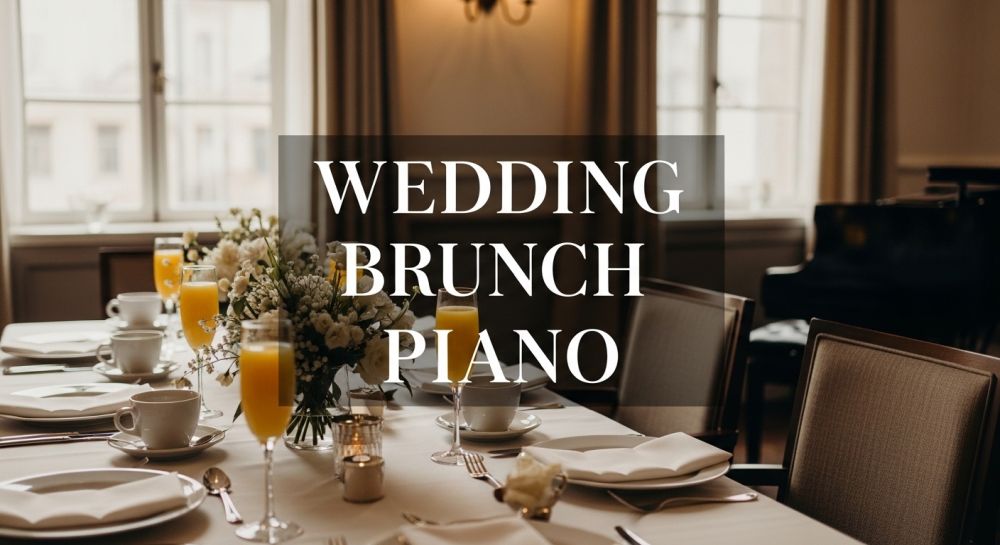
The Conversation-Friendly Piano Set That Closes Your Wedding Weekend Right
Your wedding weekend does not end with the last dance. For many couples, the Sunday wedding brunch is the final gathering before everyone scatters back to their regular lives. It is also, more often than not, a total afterthought.
The ceremony had a string quartet. The reception had a DJ, a band, or a pianist keeping energy high through the final send-off. But the day-after wedding brunch? Most couples either skip the music entirely or rely on a phone propped against a water pitcher playing a Spotify mix at half volume.
Wedding Brunch & Farewell Events
The Sunday Brunch Your
Guests Will Actually Remember
Light jazz, modern pop covers, and classic standards played at conversation volume. The perfect close to your wedding weekend in NJ, NYC, or Philadelphia.
That is a missed opportunity. A wedding brunch pianist playing live music at conversation volume closes the weekend the same way it opened: with intention. The right set does not take over the room. It fills the quiet gaps, supports toasts without overpowering them, and gives the morning a polished, relaxed feel that a playlist cannot match.
This guide covers everything you need to plan brunch music that actually works: the set structure, repertoire rules that differ from cocktail hour, venue logistics for restaurants and private rooms, a simple song request system, and exactly how long to book based on your timeline.
- Wedding brunch piano music fills silence, supports conversation, and gives your farewell gathering a finished, intentional feel
- The brunch set flow has six segments: arrival, first seating, dining, toasts, wind-down, and goodbye
- Brunch repertoire is different from cocktail hour: lighter dynamics, mid-tempo, familiar melodies, fewer emotional peaks
- A simple 5/5/3 request system (five must-plays, five no-plays, three vibe words) keeps things smooth
- Most couples book 60 to 120 minutes of live piano depending on brunch length and toast schedule
- Venue logistics (restaurant restrictions, hotel load-in rules, outdoor wind) affect setup and should be confirmed early
What Wedding Brunch Music Is Supposed to Do
Let’s start with the function, because it is different from every other part of the wedding weekend.
At the ceremony, music signals transitions: the processional, the vows, the recessional. At the reception, music drives energy, builds a dance floor, and punctuates big moments. At the cocktail hour, music fills a holding pattern while photos finish and the room turns over.
A farewell brunch does none of those things. Its job is simpler and more specific:
- Decompress the weekend. Everyone is running on limited sleep, leftover adrenaline, and a mix of joy and sadness that the celebration is ending. The music should feel like a deep breath, not another event to “get through.”
- Keep conversation flowing. Brunch is table talk. Guests are recapping the night before, sharing favorite moments, and catching up with people they barely got to see at the reception. Background piano gives the room a warm hum without competing for attention.
- Prevent awkward quiet. Without music, a private dining room or backyard tent can feel eerily still. There is a gap between “guests arriving” and “food being served” where silence makes people self-conscious. Ambient piano fills that gap naturally.
- Support toasts without taking over. Many farewell brunches include a short toast from the couple, a parent, or the best man who forgot something last night. Music should duck under these moments and ease back in after, not require a complicated fade-out.
A brunch set is the opposite of a reception set. You are not building energy. You are holding a room at a steady, warm level where people feel comfortable talking, laughing, and saying goodbye on their own terms.
— Arnie Abrams, PianistThink of it this way: the best post-wedding brunch music is music your guests notice when it stops, not while it plays. That is the goal.
The Brunch Set Flow Map
A well-structured brunch set is not a random playlist on shuffle. It follows the natural rhythm of the meal. Below is a practical breakdown of how wedding brunch piano music moves through the event, from the first guest walking in to the final goodbye.
| Segment | Goal | Typical Length | Music Approach |
|---|---|---|---|
| Arrival | Welcoming energy, fill empty-room silence | 15 – 20 min | Light jazz standards, soft bossa nova, easy listening piano at low volume |
| First Seating | Settle guests, signal that brunch is underway | 10 – 15 min | Familiar melodies (Beatles covers, classic pop), steady mid-tempo |
| Dining | Background warmth during the meal, conversation-friendly volume | 30 – 45 min | Mix of jazz, modern pop on piano, Great American Songbook, instrumental covers |
| Toasts | Musical support under speeches, subtle volume drop | 5 – 15 min | Music ducks to near-silent or pauses; soft re-entry after each toast |
| Wind-Down | Signal the event is winding toward its close | 10 – 20 min | Slower tempo, warmer selections, romantic piano, soft classics |
| Goodbye | Final send-off, emotional but light | 5 – 10 min | One to two meaningful closing pieces, gentle energy, a soft final note |
How These Segments Work in Practice
The arrival window is the most important segment to get right. Guests walk into a private room at a restaurant or a tent in the backyard, and they need an immediate signal that this is a put-together event, not a casual drop-in. Welcoming arrival music on piano sets that tone within seconds.
During dining, the pianist reads the room. If conversation is loud and animated, the music stays soft. If there is a lull between courses, the set can gently fill the space. This is what a playlist cannot do. A live jazz pianist adjusts in real time to what the room needs.
For toasts, the approach is simple. The pianist either drops to a barely audible level or pauses entirely, then re-enters with a smooth transition after the speaker finishes. No one needs to wave at the musician or send a text. A professional wedding farewell event pianist watches for these cues and handles them without direction.
Brunch Repertoire Rules (Different From Cocktail Hour)
This is where many couples get confused. They assume that the cocktail hour playlist and the brunch playlist should be the same thing. They should not.
A cocktail hour has a social urgency to it. Guests are mingling on their feet, drinks are flowing, and the energy is building toward dinner and dancing. The music can afford to be a little more upbeat, a little more varied, even a little surprising.
A Sunday wedding brunch is the opposite. People are seated. They are tired. They are savoring the last hours of the weekend. The music needs to stay in a narrow band of energy that feels warm and familiar without pulling focus.
What Works at a Wedding Brunch
- Familiar melodies. Songs people know but do not need to sing along to. Think Beatles piano covers, Coldplay instrumental covers, Sinatra standards, Norah Jones-style material.
- Lighter dynamics. The pianist plays with a soft touch throughout. No dramatic crescendos, no fortissimo moments. The volume stays in a range where two people at the same table can talk without raising their voices.
- Steady mid-tempo. Not too slow, not too fast. A walking pace. Bossa nova piano, light jazz piano, and easy listening piano arrangements sit perfectly in this zone.
- Fewer emotional spikes. Save the tear-jerker for the ceremony. Brunch music should feel even-keeled: pleasant, warm, and steady.
What to Avoid at a Wedding Brunch
- Dramatic ballads. “My Heart Will Go On” at full intensity is a ceremony or first dance choice, not a brunch choice.
- Heavy “first dance” energy. Songs that carry strong emotional weight from the night before can feel awkward when guests are eating eggs Benedict at 11 a.m.
- Loud singalong vibes. You do not want half the table breaking into “Piano Man” while the other half is trying to have a quiet conversation with Grandma.
- Obscure deep cuts. Brunch is not the moment for musical discovery. Stick to songs that register as “I know this” without demanding active listening.
Farewell brunch = conversation-first volume, steady mid-tempo, familiar melodies, guests seated, winding the weekend down.
Same pianist, different approach. The repertoire overlaps, but the delivery, dynamics, and pacing change entirely.
Venue Reality Check: Where Brunch Happens and What It Means for Music
The venue for your wedding weekend brunch is almost never the same venue as the reception. That changes the logistics significantly. Here is what to expect based on the most common brunch locations.
Restaurants and Hotel Private Rooms
This is the most popular setup for a farewell breakfast or day-after brunch. A private dining room at a restaurant in New Jersey or a hotel event space in Center City Philadelphia typically comes with a few constraints:
- Space limits. Private rooms are often tight. There may be no designated area for a grand piano, and floor space near the entrance or buffet might be the only option for a keyboard setup. A digital piano on a compact stand takes up about four feet of wall space, which usually works.
- Volume caps. Restaurants have other diners on the other side of a partition wall. Hotels have check-out traffic in the lobby. The venue may set a volume limit or request that music stay below a specific decibel level. For a conversation-friendly brunch set, this is rarely an issue since the pianist is already playing at a quiet level.
- Load-in rules. Some hotels and restaurants restrict load-in times to avoid disrupting other guests. The pianist may need to arrive 30 to 45 minutes before brunch starts, use a service entrance, or avoid the main lobby during setup. Confirm this with the venue coordinator ahead of time.
- House piano vs. keyboard. A few upscale restaurants and hotel ballrooms have a house piano (grand or upright) already on site. If so, confirm that it is tuned and accessible. In most cases, the pianist will bring a professional digital piano with a portable sound system that fits the room size.
- Microphone for toasts. If someone plans to give a toast, a wireless microphone connected to the pianist’s PA system can double as the house mic. This avoids the need for a separate sound setup. Ask about this during the planning call.
Outdoor Brunch: Backyards, Patios, and Tents
A garden brunch, patio brunch, or tent setup at a private home or estate comes with a different set of challenges:
- Wind. This is the number one concern for outdoor brunch music. Wind affects the keyboard, the music stand, sheet music (if used), and the PA speaker. A weighted stand, binder clips, and a low-profile speaker setup help. Positioning the keyboard with its back to the prevailing wind direction reduces issues significantly.
- Sun and heat. A digital piano sitting in direct sunlight can overheat or become difficult to play for extended periods. Shade is not optional. If the brunch is under a tent, the pianist should be positioned under cover.
- Tent placement. In a tent setup, piano placement should avoid being directly next to the buffet line (congestion) or the entrance flap (wind gusts). A corner position works well for sound distribution and keeps the musician out of foot traffic.
- Weather backup plan. Have one. If the outdoor brunch moves inside to a smaller room on short notice, the pianist needs to know the backup location, the power outlet requirements, and whether the setup needs to change. More on weather-ready music planning is available in a separate guide.
Country Clubs, Estates, and Other Venues
A country club brunch or estate brunch tends to have better infrastructure: dedicated event rooms, on-site audio equipment, staff who are familiar with live music setups. These venues usually handle the coordination directly with the musician. Still, confirm piano placement, load-in windows, parking requirements, and whether the venue has any sound limitations in the specific room being used.
Requests Without Chaos: The 5/5/3 System
Song requests at a brunch are tricky. You want the set to feel personal, but you also do not want thirty guests lining up at the keyboard with conflicting suggestions while the pianist is mid-song.
The system Arnie uses is straightforward. It keeps the couple in control, gives the pianist clear direction, and prevents the brunch from turning into an open-mic free-for-all.
Five must-play songs give the pianist anchor points in the set. Five no-play songs prevent awkward moments. Three vibe words give the musician a creative framework for everything else. The result is a custom set list that feels personal without requiring the couple to choose every song themselves.
I tell every couple the same thing: give me five songs you love, five you do not want to hear, and three words that describe the vibe. I will handle the rest. That is what you are hiring a professional for.
— Arnie Abrams, PianistFor guest requests during the brunch itself, a request-friendly pianist can accept them on the spot, as long as they fit the vibe. If a guest asks for something on the no-play list or something that does not work for the setting, the pianist politely redirects. No drama, no interruption.
Some couples also set up a simple card at the welcome table: “Have a song request? Write it here and we will try to work it in.” This gives guests a way to participate without approaching the musician directly. Learn more about song request etiquette in a separate guide.
Planning a wedding brunch or farewell breakfast in NJ, NYC, or Philadelphia?
Let’s talk about the music. Free consultations are always available.
How Long to Book and Why
This is one of the most common questions couples ask when adding brunch reception music to their wedding weekend. The answer depends on your brunch timeline, your toast schedule, and how long you expect guests to stay.
60 Minutes
- Covers arrival through the meal
- Works for smaller groups (under 30 guests)
- Fits a tight brunch window at a restaurant
- No extended wind-down; ends after the main course
- Best if you just want background warmth during the seated portion
90 Minutes
- Covers arrival, dining, toasts, and wind-down
- Most popular duration for farewell brunches
- Allows time for the full brunch set flow map
- Gives the pianist room to read the room and adjust
- Includes a natural goodbye moment at the end
120 Minutes
- Covers everything, with room for a longer dining period
- Best for larger groups or brunches with extended toasts
- Includes a planned short intermission if needed
- Allows the pianist to play a wider range of the repertoire
- Creates a true “event” feel for the farewell gathering
Add-On Logic for Wedding Weekend Bookings
If you are already booking a pianist for the wedding ceremony or reception, adding a brunch set is often the most cost-effective way to extend the music across your entire wedding weekend. Many couples in New York City and the Philadelphia area bundle their ceremony, cocktail hour, and brunch music into a single wedding weekend musician package.
Bundling saves on travel time, setup logistics, and the cost of booking a separate musician for the brunch. It also means the same pianist who played your ceremony already knows your taste, your family, and your vibe. That continuity matters. The brunch set feels like a natural extension of the weekend rather than a disconnected add-on.
Ask about multi-event wedding music pricing during your initial free consultation.
Setup, Sound, and Equipment: What the Pianist Brings
A wedding brunch pianist arrives with a self-contained setup that works in virtually any space. Here is what that looks like in practical terms.
Standard Brunch Setup
- Digital piano on a sturdy, low-profile stand. Weighted keys for proper touch and tone. A sustain pedal for smooth, connected playing.
- Small PA system or compact speaker. For brunch, one small speaker is usually enough. No subwoofer needed. The goal is to fill a 20-to-60-person room at conversation volume, not project across a ballroom.
- Power requirements. One standard outlet. A power strip and extension cord cover most situations. For venues with limited outlet access, battery backup options are available.
- Cable management. All cables are taped or run along walls to prevent trip hazards. The setup stays discreet and out of the way.
If the Venue Has a House Piano
Some hotel ballrooms, country clubs, and upscale restaurants have a grand piano or upright piano already on site. If it is in tune and in the right location, the pianist can use it. Confirm tuning at least a week before the event. An out-of-tune piano at brunch is worse than no piano at all.
Sound for Toasts
If your brunch includes toasts, a wireless microphone can be run through the pianist’s speaker system. This eliminates the need for a separate sound setup, saves money, and keeps the tech footprint small. The toast mic handoff is simple: the pianist hands the mic to the speaker, drops the music volume, and brings it back up after the toast ends.
The entire setup and breakdown time for a brunch set is typically 20 to 30 minutes on each end. The pianist arrives before guests, sets up quietly, and breaks down after the event wraps. For restaurants with tight scheduling, a quick setup and fast teardown are built into the process.
Brunch Music Across NJ, NYC, and Philadelphia
Arnie Abrams performs farewell brunch music at venues throughout the tri-state area. With over 20 years of experience playing at event venues across the region, the logistics of different locations are second nature.
New Jersey
From North Jersey country clubs to Jersey Shore restaurants, NJ wedding brunches happen in every kind of venue. Popular brunch spots include private dining rooms in Red Bank, estate venues in Princeton, and waterfront restaurants along the coast. Central Jersey and South Jersey couples often host brunches at venues close to home after a reception at a different location.
New York City
Manhattan and Brooklyn brunch spots present unique logistics: tight elevators, narrow doorways, and building management rules about noise and load-in times. An NYC wedding brunch pianist who has played these venues before knows the workarounds. Hotel brunches in Midtown, restaurant private rooms in SoHo or Tribeca, and rooftop spaces in Williamsburg or DUMBO all require slightly different approaches.
Philadelphia
Center City restaurants, Main Line estates, and Bucks County inns are popular choices for Philadelphia wedding brunch gatherings. Parking, COI (certificate of insurance) requirements, and load-in logistics vary widely. More on Philadelphia event logistics is covered in a dedicated guide.
Why Live Piano Beats a Playlist at Brunch
You could absolutely play a Spotify playlist through a Bluetooth speaker and call it a day. Here is why most couples who try that once never do it again.
- Volume control in real time. A playlist plays at one volume. A pianist reads the room. When the table gets loud, the music stays underneath. When conversation drops, the piano gently fills the space. This dynamic control is impossible with recorded music.
- Toast support. A playlist does not pause at the right moment when someone stands up to speak. A pianist does. The music fades naturally, holds during the toast, and re-enters with a smooth transition. No one needs to fumble with a phone.
- No dead silence. Playlists end. Songs have gaps. Bluetooth disconnects. A live musician keeps continuous music flowing with smooth transitions between songs. There is no “loading” pause, no awkward gap between tracks.
- Guest engagement. There is something about live music that makes a room feel special. Guests notice it. They mention it. It becomes part of the memory of the weekend. A playlist does not generate compliments. A live set does.
- Requests on the spot. A guest wants to hear “What a Wonderful World” for Grandma. The pianist plays it. Try doing that with a locked Spotify queue.
The gap between live piano and recorded music is most noticeable in small, intimate settings, which is exactly what a farewell brunch is. The smaller the room, the more a live set matters. Read more about why live piano outshines playlists in a separate post.
At a brunch for 30 or 40 people in a restaurant private room, a live pianist is the difference between “that was nice” and “that was one of the best parts of the whole weekend.” I hear it from couples all the time.
— Arnie Abrams, PianistSmall Details That Make a Big Difference
A few things that experienced couples and planners tend to think about that first-timers often miss:
- Professional attire for daytime. A brunch is not a black-tie reception. The pianist should dress appropriately for a morning or midday event: polished but not formal. Confirm dress code expectations during the planning call.
- Quiet setup during service. If the venue is a restaurant with other patrons, the setup and teardown should be silent and discreet. No banging equipment cases, no loud soundchecks. A professional event pianist handles this automatically.
- Arrival timing. The pianist should arrive and be fully set up at least 15 to 20 minutes before the first guest walks in. On-time arrival is not “arrive at start time.” It means “ready to play at start time.”
- Vendor coordination. If you have a wedding planner or day-of coordinator, make sure they have the pianist’s contact information and vice versa. Quick communication about timeline shifts (brunch running late, toast moved up) keeps everything on track.
- Parking and access. Especially at restaurants, hotels, and city venues. Confirm where the pianist can park, whether there is loading dock access or if they need to use a main entrance, and whether elevator access is required for upper-floor rooms.
Frequently Asked Questions
What is a wedding brunch pianist?
A wedding brunch pianist is a professional musician who performs live piano music during a post-wedding brunch or farewell breakfast. The set is played at conversation volume and features light jazz, pop covers, and classic standards. The goal is to provide warm background music that supports table talk and toasts without taking over the room.
How long should live music last at a wedding brunch?
Most couples book 60 to 120 minutes of live piano for a farewell brunch. A 90-minute set is the most popular choice because it covers the full flow from guest arrival through dining, toasts, and goodbye. Shorter sets work for quick send-offs, while a two-hour set suits larger gatherings with extended toasts.
What type of music works best at a day-after wedding brunch?
Light jazz piano, instrumental piano covers of popular songs, bossa nova, and Great American Songbook standards work best. The music should be familiar, mid-tempo, and played at a soft dynamic. Avoid dramatic ballads, loud singalong songs, and anything that carries heavy emotional weight from the reception the night before.
Can the pianist also provide a microphone for toasts?
Yes. Most professional wedding farewell event pianists carry a wireless microphone that connects to their PA system. This eliminates the need for separate sound equipment. The pianist handles the mic handoff, adjusts the music volume during the toast, and brings the set back in after the speaker finishes.
What equipment does the pianist bring?
A typical brunch setup includes a digital piano on a compact stand, a small speaker or PA system, a sustain pedal, power cable, and extension cord. The footprint is roughly four feet of wall space. If the venue has a house piano that is in tune, the pianist can use that instead. All cables are managed to prevent trip hazards.
Is brunch music different from cocktail hour music?
Yes. Cocktail hour music tends to be more energetic and varied because guests are standing, socializing, and building toward dinner. Brunch music is quieter, steadier, and more conversation-focused. The repertoire overlaps, but the delivery, volume, and pacing are adjusted to suit a seated morning or midday gathering.
How far in advance should I book a brunch pianist?
Book as early as possible, especially for popular wedding weekends in spring and fall. If you are already booking a pianist for your ceremony or reception, adding a brunch set at the same time locks in availability and often reduces the total cost. Sunday mornings are high-demand slots for NJ wedding brunch pianists.
Does Arnie Abrams perform at farewell brunches in NYC and Philadelphia?
Yes. Arnie Abrams performs farewell brunch music throughout New Jersey, New York City (Manhattan, Brooklyn, Queens, and surrounding boroughs), and the Philadelphia area (Center City, the Main Line, Bucks County, and surrounding suburbs). Contact Arnie directly at (732) 995-1082 to check availability for your date.
The Right Close to Your Wedding Weekend
Your guests traveled for your wedding. They dressed up, danced, gave toasts, and stayed up too late. The Sunday wedding brunch is the last time you will all be together in one place before real life resumes.
A wedding brunch pianist playing live piano music at conversation volume does not make the brunch louder or busier or more complicated. It makes it feel complete. It gives the room a pulse. It turns a nice meal into a proper wedding weekend send-off that people remember alongside the ceremony and the first dance.
Planning a day-after wedding brunch or farewell breakfast in New Jersey, New York City, or Philadelphia? Call or text (732) 995-1082 to talk through your brunch timeline, venue, and music preferences. A free consultation is always available.
Ready to Close Your Wedding Weekend the Right Way?
Live piano for your farewell brunch. Light jazz, pop covers, and requests at the perfect volume.
NJ • NYC • Philadelphia